The Division of Epidemiology, Department of Disease Control (DDC), successfully organized a Strategic Meeting and ASEAN+3 Field Epidemiology Training Network Strategic Planning Workshop. Held from 25–27 February 2026 at the U Inchantree Kanchanaburi Hotel, Kanchanaburi Province, the workshop brought together key personnel from the Division of Epidemiology, the Office of International Cooperation, and the Thailand-U.S. Collaboration (TUC) in Public Health.
Strategic Pillars & Objectives 🎯
The workshop defined clear strategic directions focused on three essential pillars:
1. Workforce Capacity: Strengthening national-level field epidemiology workforce capabilities.
2. One Health Collaboration: Enhancing multi-sectoral collaboration through the integrated One Health approach.
3.Regional Coordination: Improving coordination mechanisms to ensure the long-term sustainability of the network.
Key Activities & Progress 🚀
During the session, participants conducted a comprehensive review of 13 core activities. Key outcomes included:
- Implementation Mapping: Identification of implementation gaps and the clear assignment of roles and responsibilities among member states.
- Monitoring & Evaluation: Development of a results-based M&E framework to enhance systematic implementation.
- Technical Support: Emphasis on the Technical Expert & Advisory (TEA) Panel to support academic and technical functions.
- Country Ownership: Promoting stronger ownership among member states to build foundations that address increasingly complex health threats.
Advancing Regional Collaboration 🌏
This workshop highlights a proactive role in advancing regional collaboration under the ASEAN+3 FETN. By refining these strategic pillars, the network continues to contribute to enhanced health security and improved preparedness for emerging and re-emerging diseases in the future.
ASEAN+3 FETN Strategic Planning Workshop in Kanchanaburi 🏔️✨
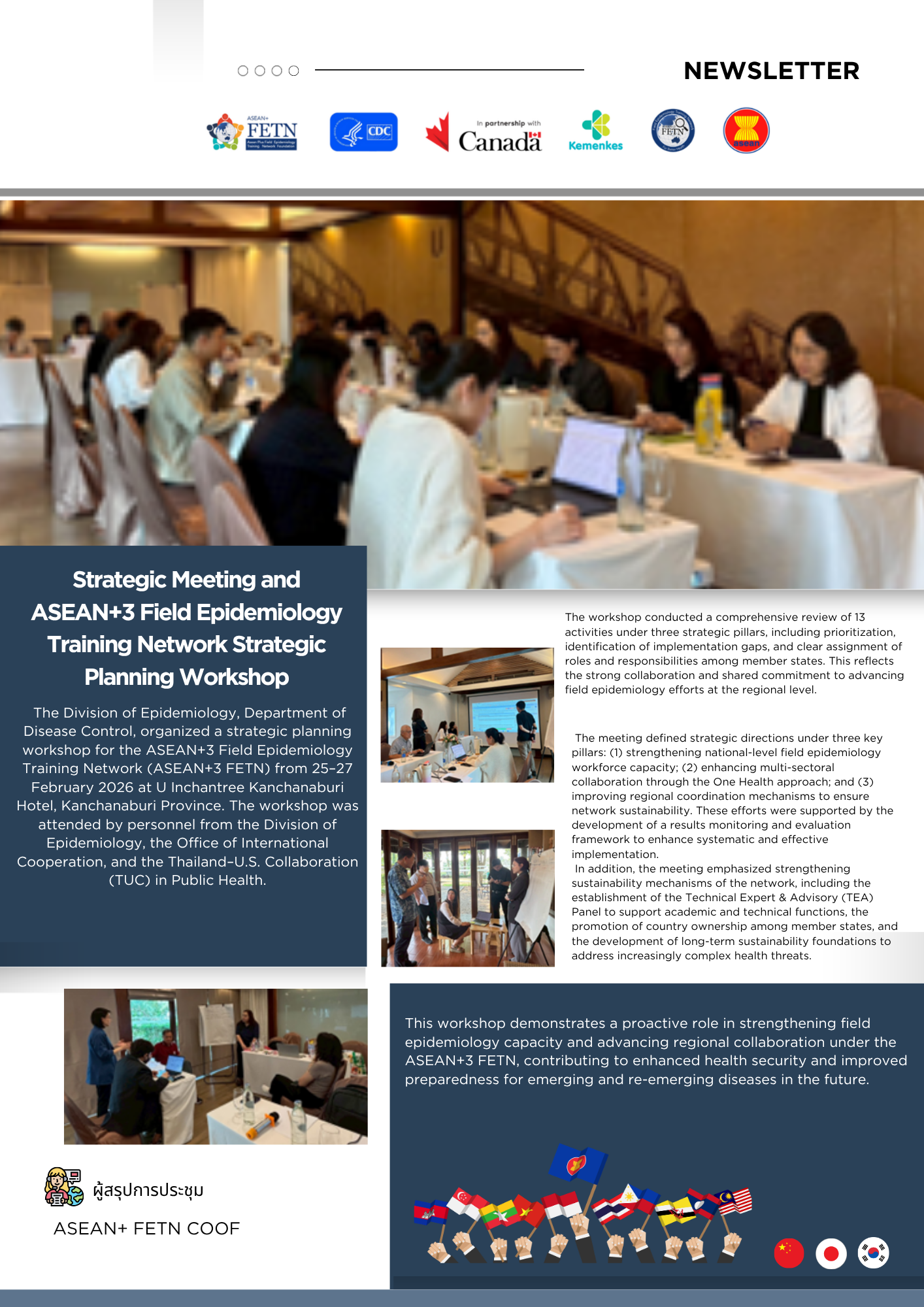
Our strategic planning workshop for the ASEAN+3 FETN was successfully convened in Kanchanaburi.🤝🌐